Can a Mac read a drive taken out of a Synology NAS?
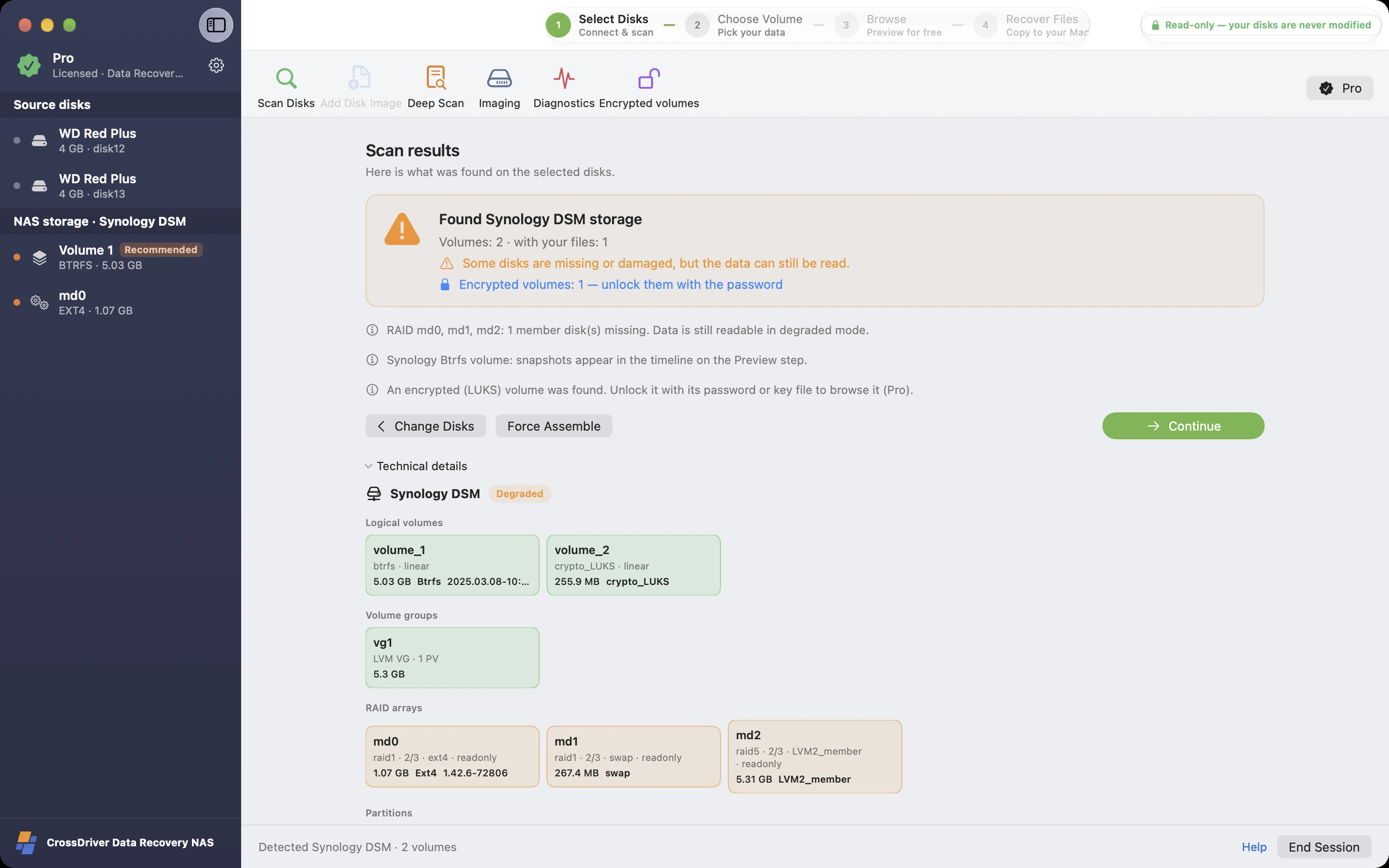
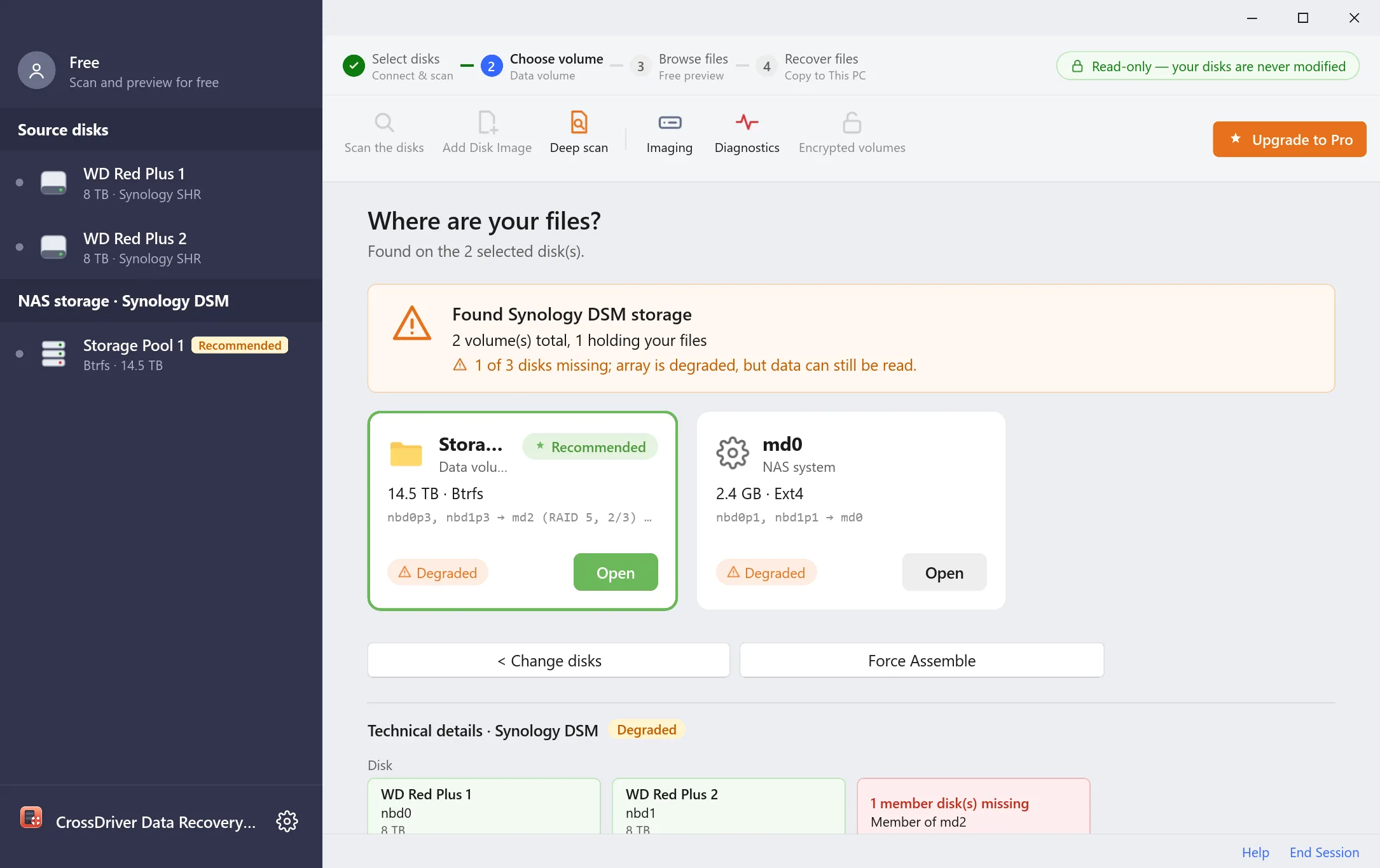
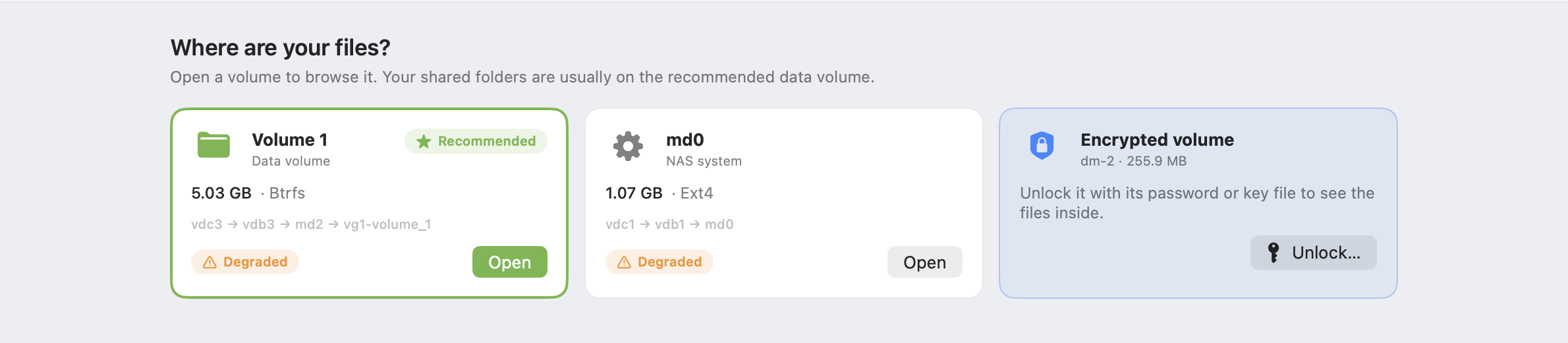
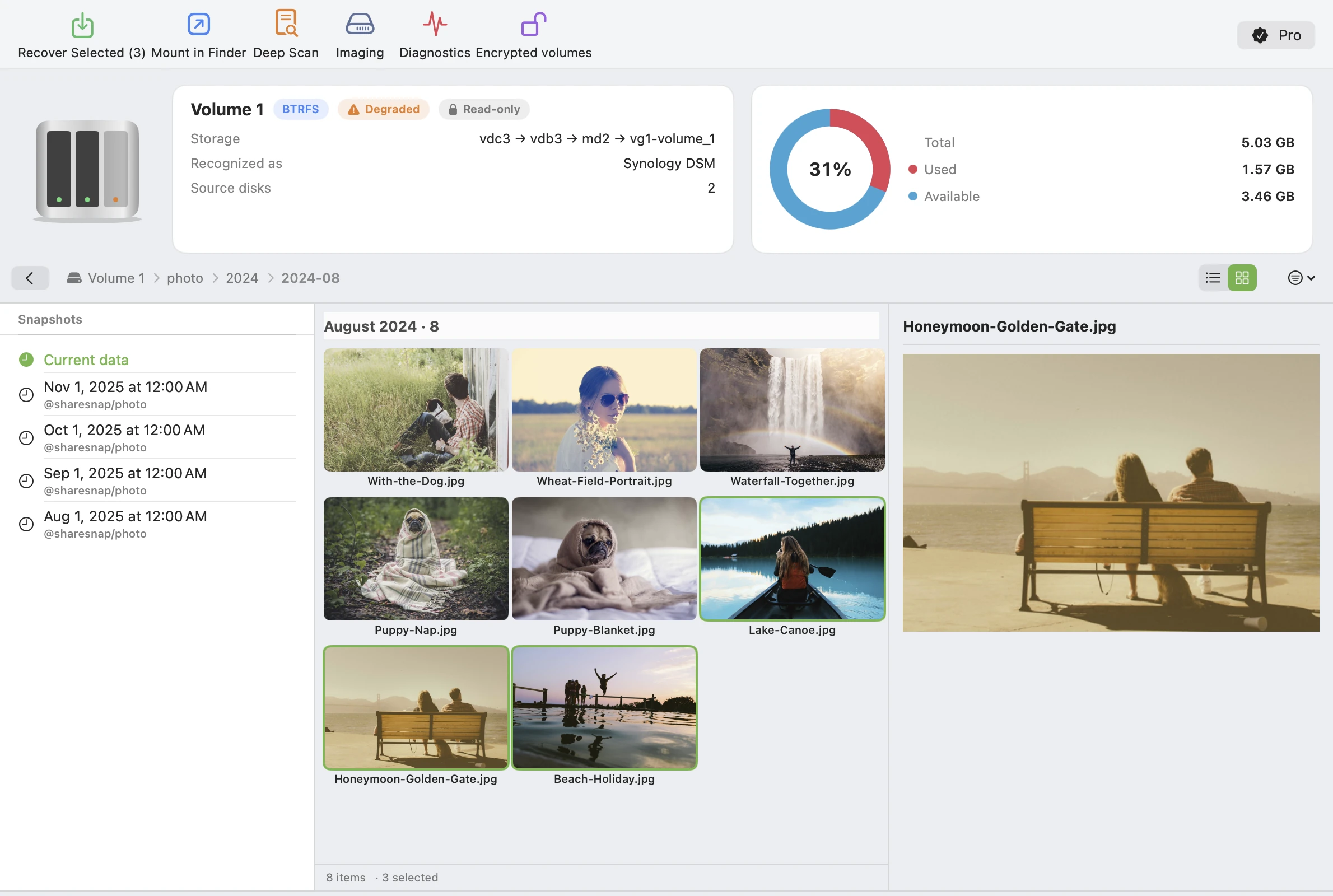
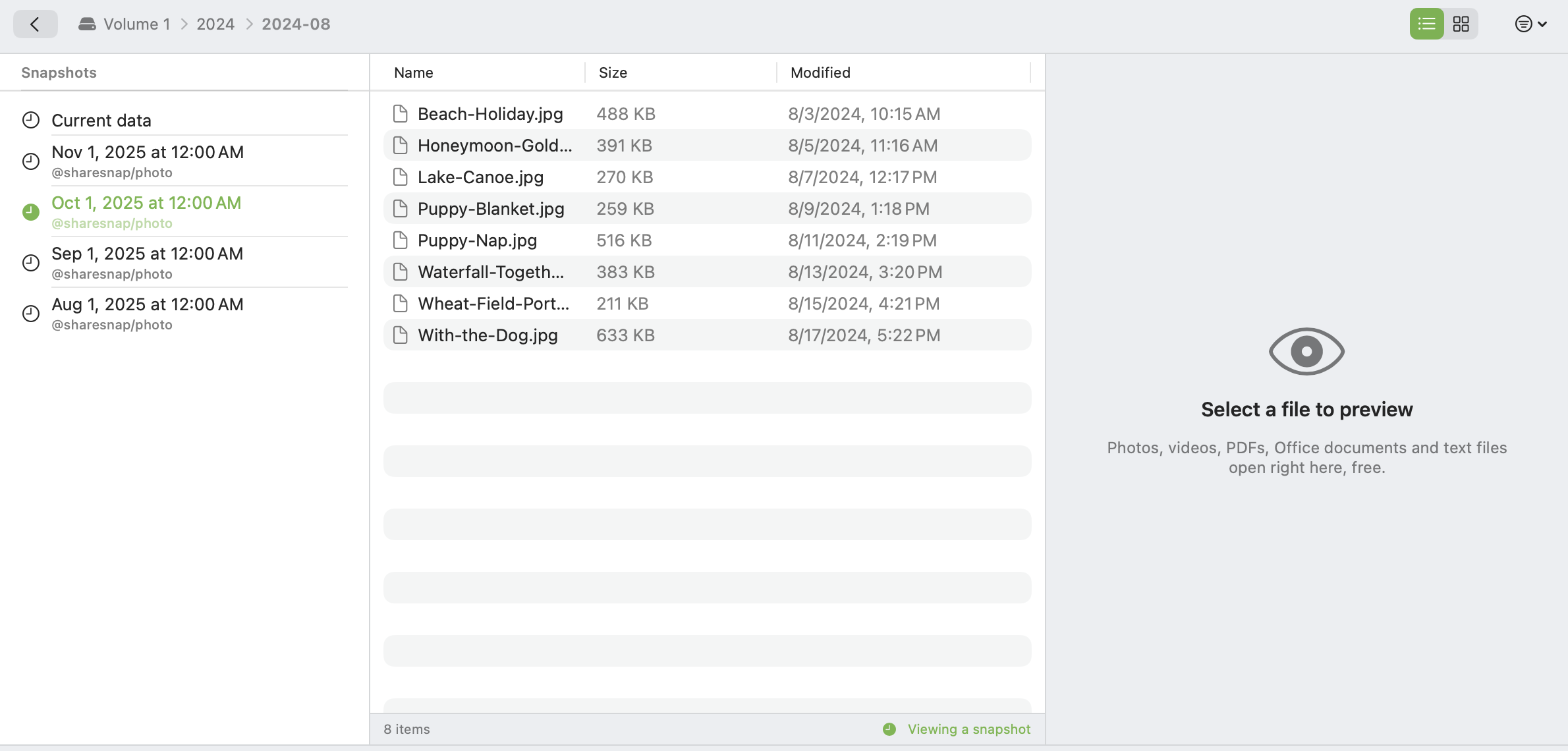
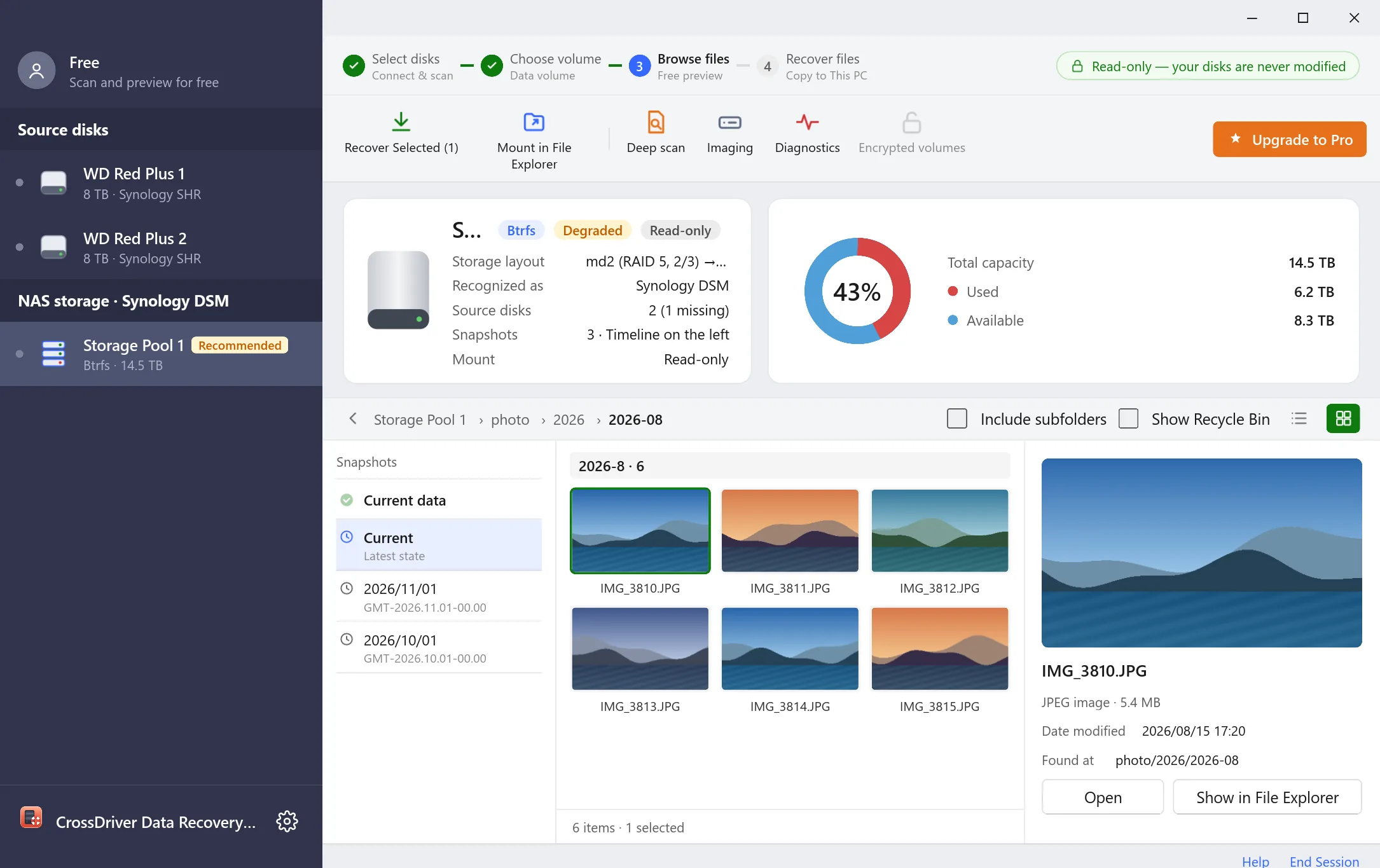
Not by plugging it in directly: Synology data usually sits on SHR / RAID and LVM, so macOS says "The disk you attached was not readable by this computer." Click "Ignore" and never initialize it. Connect all drives from the same storage pool and Data Recovery NAS rebuilds the array read-only, finds data volumes such as "Volume 1," and lets you browse and preview for free. For detailed steps, see Reading Synology drives on a Mac.
Can it read drives from the DS920+, DS220+, DS923+ and other Synology models?
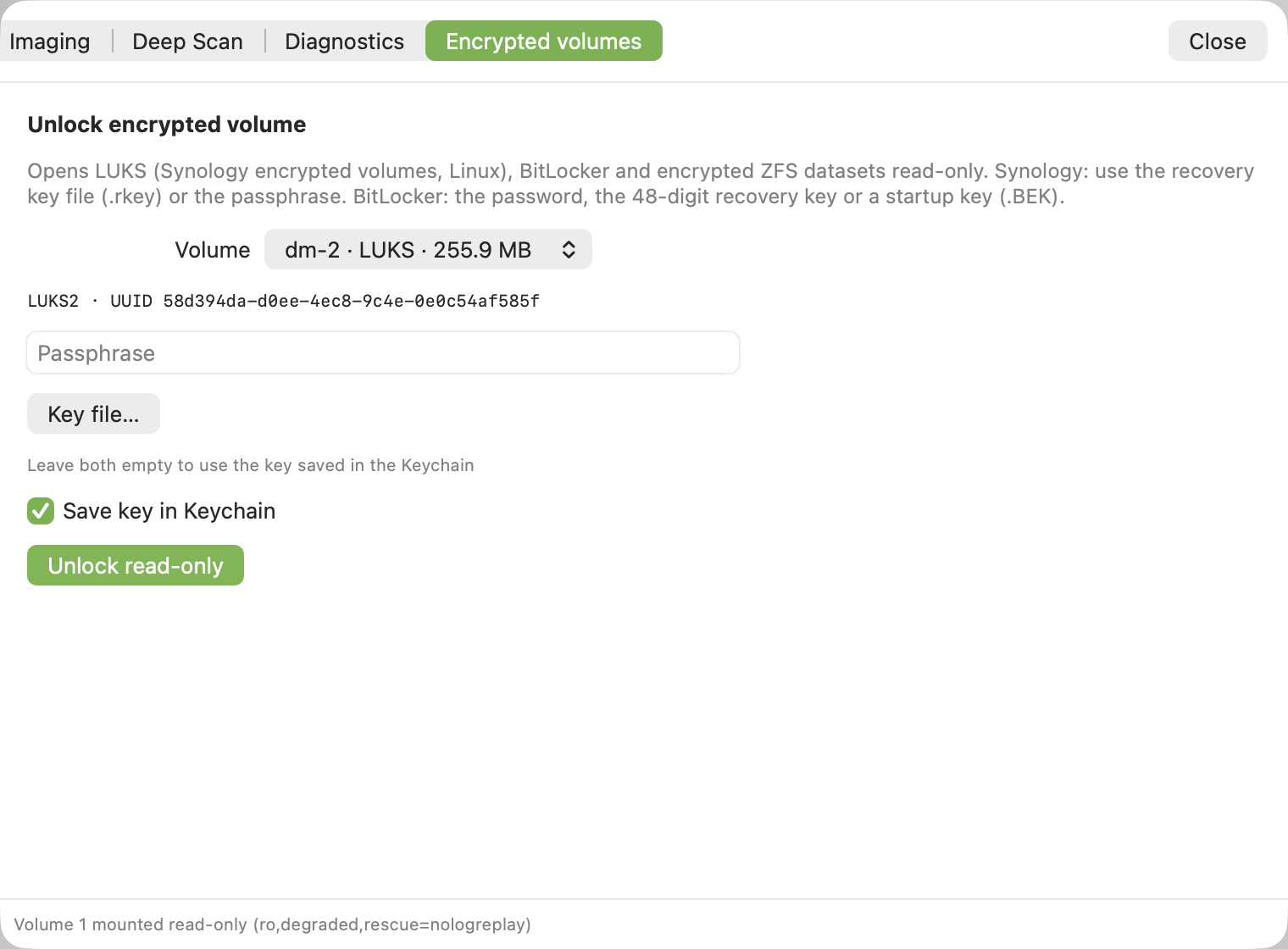
Whether it can be read depends on the storage layout, not the model. Tested so far: SHR (md + LVM + Btrfs) and Btrfs snapshots. Classic RAID, Ext4 volumes and Synology encrypted volumes are implemented with standard Linux tools but not yet verified on real hardware; encrypted shared folders (eCryptfs) are not supported yet. Scan with the free version first — the scan result tells you directly whether it can be read.
Can it recover QNAP drives?
QNAP QTS and QuTS hero (ZFS) storage pools are implemented with standard Linux tools but not yet verified on real hardware. Scan with the free version first — the scan result tells you directly whether it can be read.
Storage pool crashed but the drives are fine. Is my data lost?
Usually not right away. A crashed pool usually means the array or file-system metadata is damaged, while most of the file data is still on the drives. Until you know the cause, don't initialize the drives, recreate the pool, or reinstall the system. Take the drives out, connect them to a Mac, and let Data Recovery NAS rebuild the array read-only so you can browse and preview for free, then recover once you see your files. If a drive clicks or isn't detected, take it to a professional recovery lab.
My NAS motherboard died / it won't boot. Is my data still there?
Very likely. Motherboard, power supply and system failures don't affect the data on the drives. Remove all the drives in order, connect them to your Mac and scan.
What if DSM won't start after an update?
Don't reinstall or initialize yet. Connect the drives to your Mac, scan and preview with the free version, and confirm your files are there.
One disk in my RAID 1 failed. Can I still read it?
Yes. RAID 1 is readable as long as one good disk remains; RAID 5 and SHR can be missing one disk, and RAID 6 and SHR-2 can be missing two.
Ubuntu says "can't read superblock." Is there any hope?
It doesn't necessarily mean the data is damaged — it may just be the kernel version, mount options or a missing disk. Data Recovery NAS tries progressively more lenient read-only mount methods, and if Btrfs still won't mount, it can rescue files directly with btrfs restore. Try a free scan first.
TrueNAS says "cannot import pool." What should I do?
Data Recovery NAS imports the storage pool read-only with OpenZFS and never rewrites any pool information. TrueNAS has not yet been verified on real hardware; you can scan and preview for free first.
What hardware do I need?
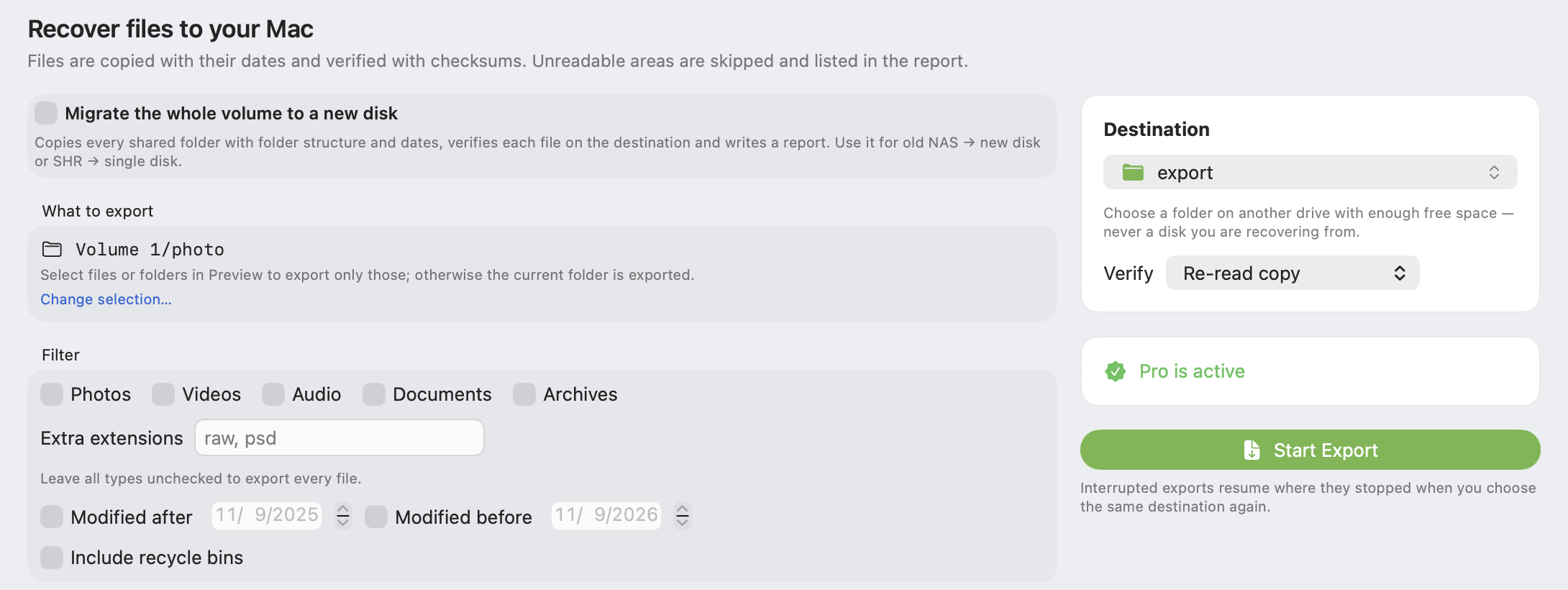
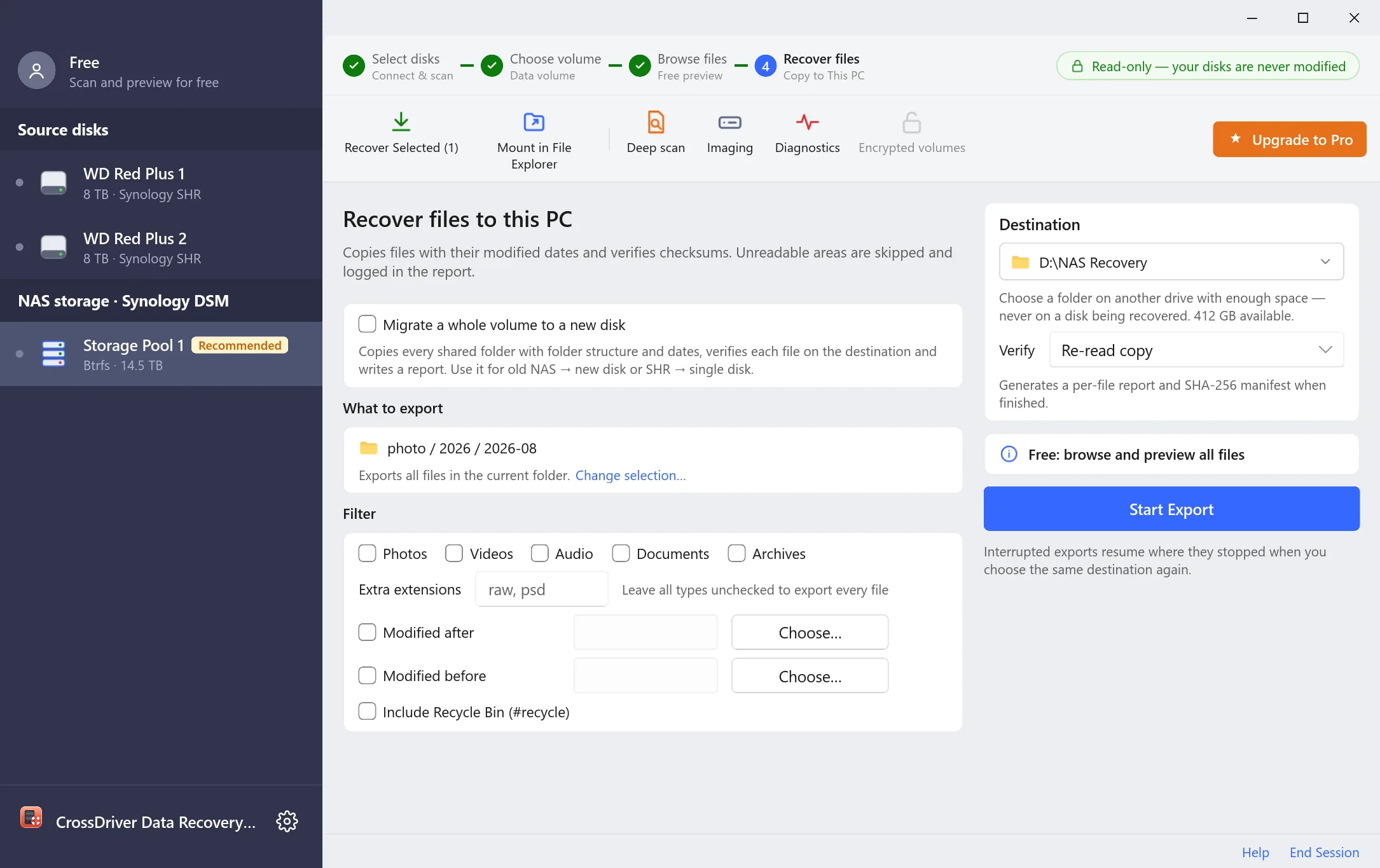
A SATA-to-USB adapter or drive dock for each NAS drive (multi-bay docks work too), plus a destination disk with enough space for the recovered files.
When should I go to a professional?
If a drive makes strange noises, won't spin up or keeps disconnecting, or several drives have physical faults at once, stop powering them and contact a professional data recovery service.
Can I still recover with a disk missing?
RAID 1/5/6/10 and SHR can still be read with up to the allowed number of disks missing. If the array is out of sync, you can try "Force Assemble" — changes happen only in an in-memory overlay and are never written to the drives.
Could it damage my drives or NAS configuration?
No. The drives are attached read-only and Data Recovery NAS does not write to them, so putting them back in the original NAS afterwards is unaffected.
Do I need to install a kernel extension or disable SIP?
No. Data Recovery NAS uses the Virtualization framework built into macOS to run an isolated, lightweight Linux environment that reads the drives.
Which NAS systems are supported?
Tested: Synology SHR (md + LVM + Btrfs) and Btrfs snapshots. Synology Classic RAID and encrypted volumes, QNAP (QTS, QuTS hero), UGREEN, Unraid, TrueNAS, and self-built Linux NAS using mdadm, LVM, Ext4, XFS or ZFS are implemented with standard Linux tools but not yet verified on real hardware — scan with the free version first.
How is it different from CrossDriver Ext4 / XFS?
The Ext4 and XFS apps are for everyday reading and writing of single, ordinary disks. Data Recovery NAS never writes; it exists to recover files. It rebuilds NAS RAID, LVM, and ZFS read-only first, and it's also the tool for single hard drives, USB sticks, and SD cards that won't open, ask to be formatted, or have bad sectors.